Derui chamber
Guangdong Derui Testing Equipment Co., Ltd. has announced the export of a motorcycle wheel torsional fatigue tester for international testing applications. This company update highlights the engineering requirements behind a wheel-test project, from specimen mounting and torque loading to acceptance records and delivery preparation.
- Match the wheel geometry, mounting interfaces and loading arrangement to the required test method.
- Confirm torque range, test sequence, measurements and stop criteria for the specific configuration.
- Agree on verification records, operator information and installation responsibilities before delivery.
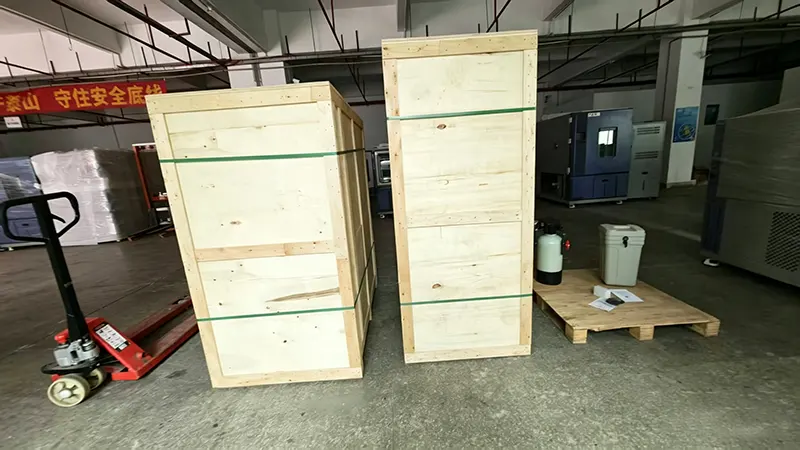
Exporting a Test System Starts with a Defined Application
A motorcycle wheel testing project involves more than choosing a machine by its maximum torque. The wheel construction, hub interfaces, fixture arrangement and intended loading sequence all influence the equipment configuration and the test results that can be obtained.
For overseas projects, these technical requirements also need to be considered alongside the installation site, available utilities, handling arrangements and documentation. The packing photograph above accompanies Derui’s export update; the approved project specification remains the reference for the equipment supplied.
What a Wheel Torsional Fatigue Project Needs to Define
Torsional fatigue testing involves repeated twisting loads applied through a defined mounting arrangement. The specified method determines how the specimen is held, how loading is applied and what is recorded. Fixture geometry and alignment are therefore part of the test definition, not simply accessories to choose after the machine is ordered.
Before quotation, the customer and supplier should establish the following items for the proposed system.
| Engineering input | Information to provide | What to confirm |
|---|---|---|
| Wheel and mounting geometry | Wheel drawings, construction, hub dimensions and mounting interfaces | Fixture fit, adapters, alignment and specimen clearance |
| Loading programme | Required torque profile, loading direction, cycle programme and method reference | The operating range and loading sequence supported by the quoted configuration |
| Measurements and records | Required channels, recording intervals, result format and acceptance limits | Measurement range, verification needs and the records to be delivered |
| Stop and safety conditions | Method-defined failure criteria, permitted movement and operator access | Included interlocks, limits and any required failure-detection options |
| Site and delivery | Power supply, floor space, access route and unloading constraints | Layout, utilities, installation tasks and shipping scope |
These are specification topics rather than default features or fixed performance values. Torque capacity, wheel-size coverage, measurement accuracy and data-acquisition capability should be taken from the quotation and technical documents for the actual configuration.
Confirm the Applicable Method—Not Just a Standards Label
ISO 8644:2006 describes performance test methods for light-alloy motorcycle road wheels. Whether a particular procedure applies depends on the wheel and the approved test programme.
A reference to ISO 8644 does not by itself establish that one machine performs every procedure, that a particular configuration has been verified, or that the customer’s wheel is certified. The method edition, relevant clauses, fixture arrangement and acceptance criteria need to be agreed for the project.
If an OEM procedure or another regional method is required, provide the approved document for review. Loading conditions and equipment capability should not be assumed to transfer unchanged between methods.
Acceptance Records and Delivery Preparation
Before dispatch, agree on the checks needed to demonstrate the supplied configuration. Depending on the project, these may include fixture and sample trials, control-sequence checks, measurement verification and a review of the agreed result records.
Specify which manuals, calibration or verification records, software information and packing documents are required. Installation support, operator training, warranty and spare-parts arrangements should also be stated in the quotation or contract, including the responsibilities of both parties.
For an overseas installation, confirming utilities, access and unloading arrangements early helps the technical and delivery teams work from the same project scope.
Discuss a Motorcycle Wheel Testing Requirement
For a new project, start with the wheel drawing, the test-method reference, required torque programme, measurements and failure criteria. Add the intended installation country and project stage. Unknown items can be listed as questions for engineering review rather than filled with assumed specifications.
Explore the motorcycle wheel torsional fatigue tester page and our motorcycle testing systems. If you are still separating wheel, frame, brake and powertrain requirements, read the motorcycle test-system selection guide before defining the quotation scope.