Derui chamber


 Message
SCOOTER FOLDING MECHANISM · HINGE & LATCH ENDURANCE
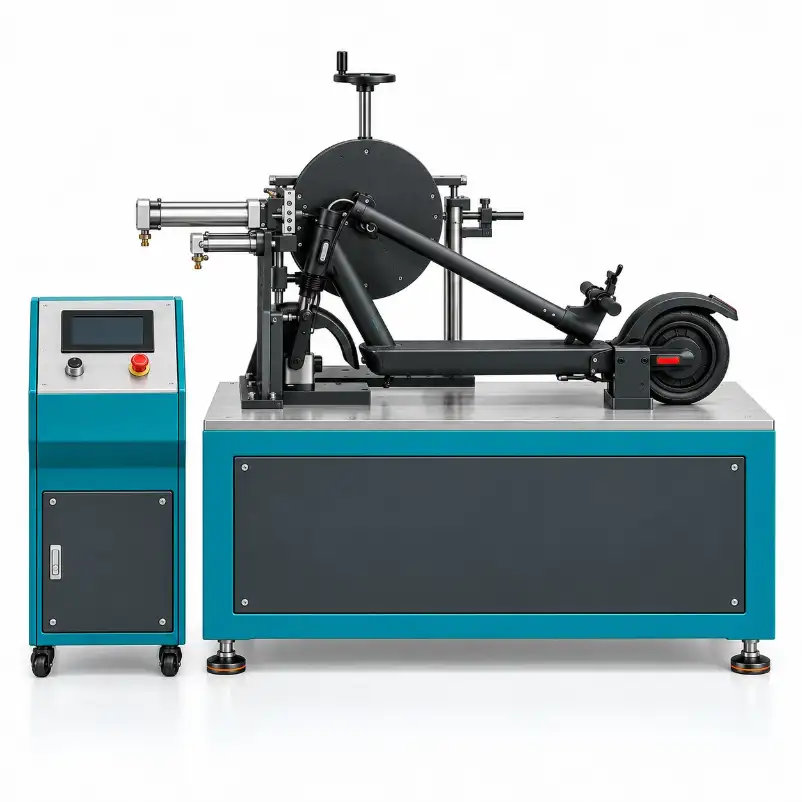
Evaluate a folding mechanism against a defined motion and locking sequence. Derui’s scooter folding fatigue test machine is intended for projects where the hinge geometry, actuation interfaces and checks after each cycle must match the actual assembly.
Specify what counts as a completed folding cycle
Send the hinge drawing and a video of the manual folding action. Review how the latch is released, how the stem moves, how it returns and how the required locked state is confirmed.
- Match the mechanism: hinge axis, stem geometry, release lever and secondary restraint.
- Define the sequence: unlocking, folding, return, relocking and dwell as required.
- Measure the outcome: completed cycles, interruptions, inspections and relevant functional checks.
Investigate Wear Without Bypassing the Locking Mechanism
Compare hinge revisions
Evaluate changes to pivots, latch contact or release interfaces under the same assembly preparation and motion sequence.
Review the working assembly
Include the components and adjustment settings required by the programme rather than cycling a disconnected hinge alone.
Track functional change
Examine increased play, wear, release difficulty or incomplete locking using defined inspection and measurement methods.
A large cycle count is useful only when it describes a meaningful completed sequence. Moving a stem through an angle while bypassing its latch does not evaluate the same mechanism as repeated release and locking.
Define Motion, Release and Lock-State Checks Separately
Folding mechanisms differ. Some use a lever and safety catch; others require a release action before movement or a separate restraint in the folded position. A quotation should state which actions the supplied fixture performs and which remain manual.
| Sequence stage | Requirement to define | Evidence to confirm |
|---|---|---|
| Release | Primary latch, safety catch and required actuation order. | Compatible release fixture, travel and any fitted state checks. |
| Fold | Pivot path, angular travel, speed and allowed contact. | Motion clearance, end positions and restraint of the remaining assembly. |
| Return | Unfolding path, dwell and additional release actions. | Repeatable movement without unintended bending or interference. |
| Relock and assess | Required locked condition and any functional check. | Specified verification method before a cycle is counted as complete. |
These are sequence-planning requirements, not a claim that every action is automated in the standard machine. A cylinder stroke or completed motion command is not, by itself, proof that a latch has locked.
Locate the Hinge Before Choosing the Actuator
Support the intended assembly
Specify whether the test uses a complete scooter, a deck-and-stem assembly or a dedicated hinge specimen. Define deck support, rear restraint and the components left installed. If cables pass through the hinge region, state whether their routing and condition form part of the test.
Keep the pivot and drive relationship correct
The applied motion should follow the required hinge path. Fixture misalignment can add unintended forces or restrict the joint. Review pivot location, actuation contact and clearances through the full required travel using the actual sample.
Preserve the required locking condition
Record adjustment, fastener settings, lubrication and any specified bedding-in. Decide when retightening or adjustment is allowed; undocumented maintenance can change the meaning of the endurance result.
A fixture that supports a latch directly may bypass the load or movement relevant to the joint. Include the intended assembly boundary and contact locations in the setup review.
Folding Fatigue Test Machine Configuration Checklist
| Area | Inputs to define | Confirm in the proposal |
|---|---|---|
| Specimen and fixture | Hinge drawing, stem/deck geometry and restraint points. | Adapters, adjustment, clearance and included specimen families. |
| Actuation | Release interfaces, folding path, end positions and dwell. | Actual drive arrangement, sequence and any manual steps. |
| Functional checks | Lock condition, play, release effort or other required observations. | Installed sensors or agreed inspection methods; included versus optional functions. |
| Programme | Cycle definition, sequence rate, inspections and maintenance rules. | Usable sequence rate for the actual mechanism and record-retention behaviour. |
| Handover | Records, protection, utilities, training and acceptance tasks. | Example output, services, operating instructions and support scope. |
Specify a full completed-sequence rate, not only the speed of one actuator stroke. Force, torque, angle and play measurements require the corresponding sensors and a defined measurement arrangement.
A Four-Step Folding Mechanism Test Workflow
Define the mechanism state
Record the specimen, settings, lubrication, initial play and required cycle.
Check the complete motion
Confirm restraints, pivot alignment, release interfaces and clearance using the sample.
Run the agreed sequence
Retain completed cycles, interruptions, lock-check results where fitted and permitted interventions.
Inspect functional change
Evaluate wear, damage, play and locking behaviour against the defined criteria.
Follow the supplied operating instructions. Define the response to incomplete locking, obstruction or loss of actuation before running an endurance programme.
Folding Endurance Is Not the Same as Locked-Joint Strength
Opening and closing the mechanism evaluates a different task from applying structural load to a locked joint. If the project requires locked-joint fatigue, static security or impact testing, define those tasks and their fixtures separately. This machine name does not establish that all are included.
EN 17128 addresses personal light electric vehicles within its scope; EN 14619 concerns non-powered kick scooters within its scope. Provide the applicable edition and exact clause/task for review. Neither the title nor the concept image proves complete conformity or certifies the finished scooter.
For different structural tasks, review the frame fatigue configuration and handlebar fatigue test machine.
Agree on equipment acceptance with your mechanism
Demonstrate the complete agreed sequence on a representative sample. Verify the included release actions, required end positions, locking checks, stop response and an example record. Review pinch points, moving stems, stored pneumatic energy and access protection for the actual installation.
What to Send for a Folding Mechanism Tester Quote
- Hinge and assembly drawings, representative sample and a video of the manual action.
- Release lever, safety catch, pivot path and folded/unfolded restraint details.
- Cycle definition, rate, dwell, loading condition and total programme.
- Lock verification, play/effort checks, inspections and permitted maintenance.
- Fixture families, utilities, protection, output records and acceptance trial.
Use a sample review to resolve the sequence
Share the drawing and folding-action video. Derui can review the fixture and required operations with your team so the proposal identifies automated, manual and optional functions.
Folding Fatigue Tester Buying Questions
Does it automatically unlock every scooter design?
No universal capability should be assumed. Release levers, safety catches and access differ. Confirm the required actuation adapters and any remaining manual steps for your sample.
How is a completed cycle counted?
Define the required sequence and checks. A motion stroke alone does not prove completion of unlocking, return and relocking.
Can it measure hinge play or release force?
Those functions require suitable measurement hardware and a defined method. Confirm inclusion, sensor locations and verification separately.
Does folding endurance also prove locked-joint fatigue strength?
No. The motion and load paths differ. Specify any structural task and its required fixture separately.
Can one fixture handle several scooter models?
Review hinge geometry, deck/stem restraint and release interfaces for each family. The proposal should identify adapter changes and adjustment limits.
What if the mechanism jams or fails to lock?
Agree on detection, stop response, intervention rules and how the interruption is recorded. Do not assume every failure is automatically identified.